

|
|
|
Welcome to Lakeland Power
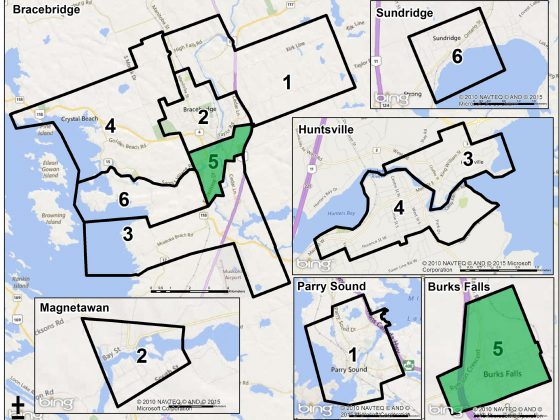
We are the local electricity distributor for homes and businesses in Bracebridge, Huntsville, Burk’s Falls, Magnetawan and Sundridge. |
| |
|
Our website contains general information on Lakeland Power, our business policies and rates, energy saving tips, as well as information on what is happening in the electricity market and more.
|
| |
|
We hope that you find it informative and of course, we are always open to suggestions for improving the information available to you.
|
|
|
|
|
Payment Options
Pre-Authorized Payment is the easiest method of payment available. You will still continue to receive your monthly Lakeland Power bill. The total amount due is withdrawn automatically from your bank account on the due date shown. To enroll, please mail or deliver a completed enrolment/authorization form and a void cheque to our office listed below. Enrolment/authorization forms are available on this website in the Residential or General Service Customer Information segments.
Most Financial Institutions offer telephone or internet banking and payments can be made via either of these methods as well. Please note that your account number is a total of 8 digits and all 8 digits must be recorded to properly credit the correct account with payment. Lakeland Power assumes no liability for the electronic transfer of funds to incorrect account numbers. Also please note that if you move within Lakeland Power’s service territory, your account number will change and you will have to register your new account number with your Financial Institution for telephone or internet banking.
VISA and Mastercard payments are now accepted by Lakeland Power. Paymentus Corporation, a third party electronic bill payment service provider, will process all of our credit card payments. This new payment option is available to you 24 hours a day, 7 days a week. Customers who use this payment option will be charged a processing fee of $5.95 for each payment made up to a maximum of $250. If your payment exceeds this $250 maximum, you will have to process more than one payment. Each payment will incur a $5.95 processing fee.
To make a credit card payment, you have 2 options:
- To pay online, click

- To pay using the automated telephone system, call the toll free number at 1-866-417-2810
You may also pay your Lakeland Power bill by cash, cheque or money order. Use our convenient drop box at, or mail payment with the remittance stub to: Lakeland Power, 200 - 395 Centre St N, Huntsville, Ontario, P1H 2M2. A drop box is also located at our office at 196 Taylor Road in Bracebridge, Ontario.
We strongly recommend that you do not put cash into any of our drop boxes.
Payment can also be made in person at most Financial Institutions again with presentment of the remittance stub at the time of payment.
Note : Payments mailed or paid at a Financial Institution may take several days to reach us. To avoid late payment charges, please ensure that we receive your payment before the due date.
|
|
|
Smart Meter Installation – Backgrounder
|
|
Lakeland Power started the roll-out and installation of smart meters throughout our service territory June 1, 2009. We anticipate the entire mass installation will continue on through the remainder of the year.
An information package on smart meters will be provided at each residence when the installation has been done.
Residents who have an outside meter do not need to be home when the meter exchange is being done. You do not have to present your hydro bill or sign any contract.
Homeowners are asked to ensure the area around their current electricity meter is clear and easily accessible.
If the meter is located inside, you will be contacted to book an appointment.
The time involved in installing the smart meter will vary from location to location, but is estimated to take an average of 10-15 minutes.
The installation process is most locations will not be difficult because smart meters typically fit into the same standard meter base used by current meters.
For the safety of the installation crew, there will be a short power interruption during the meter exchange. Clocks and timers will need to be reset but the brief interruption should not affect the temperature in refrigerators and freezers. We apologize in advance for this inconvenience.
Once the new smart meter is installed, homeowners are not required to take any further specific steps for the meter to work.
Until the “time of use” rate structure is implemented, there will be no immediate change to how the electricity rates work and how Lakeland residents are currently billed for electricity.
Ontario is introducing smart meters – along with a “time-of-use” (TOU) electricity price structure – to help consumers manage their electricity costs, while helping Ontario to build a more efficient, more environmentally sound electricity system. Between now and 2025, Ontario will replace about 80 percent of its electricity system.
Smart meters measure hourly electricity use, so electricity prices can be different at different hours of the day. That better matches the way prices work in the electricity market.
Residents cannot choose whether or not to have a smart meter. Smart meters will be standard province-wide. Under Ontario’s Smart Meter Initiative, residential and small business electricity consumers across the province will receive a smart meter by 2010.
Please contact us if you have further questions.
|
Here's the path information takes from your smart meter to your electricity bill.
Smart Meters
On an hourly basis, the amount of electricity you use is tracked by the smart meter on your home.
Collectors
Each day, this hourly information is sent by wireless connection or through telephone or power lines to a data collector located in your neighbourhood.
Meter Data Collection
These collectors relay energy usage information to larger control computers operated by your Local Distribution Company (Lakeland Power) which ensure that all the meters have been read and all the necessary information has been captured.
Meter Data Collection
These collectors relay energy usage information to larger control computers operated by Lakeland Power which ensure that all the meters have been read and all the necessary information has been captured.
Smart Meter Data Repository
Lakeland Power will then send this information to the provincial smart meter data repository which calculates how much electricity was used during on-peak, mid-peak and off-peak hours. In its role as interim Smart Metering Entity, the Independent Electricity System Operator (IESO) is responsible for managing this repository. This energy use information will also help in the development of electricity forecasts and will help the Ontario Energy Board determine future time-of-use prices. Only authorized parties, such as Lakeland Power, will have access to the highly secure database.
Customer Information and Billing
Information from the data repository is sent back to Lakeland Power and other billing agents so it can be used to prepare invoices.
Home Energy Management
Homeowners will have access to their energy use data in two ways: Lakeland Power invoices will provide consumption data each billing cycle; and in many communities, the previous day's energy consumption information will be available each morning on a secure personalized web page. This information allows you to manage your energy use based on time-of-use prices.
|
SMART METERS FAQs
|
|
SMART METERS
TOU RATES
|
What is a smart meter?
A smart meter looks like the meter you have now, except the display is digital and there are no dials. It records how much electricity was used and when it was used (typically hourly) and communicates this information automatically via wireless and other technologies.
 How different is it from my old meter?
The old meter has dials and measures the total amount of electricity used in a billing period, typically one or two months, so customers do not have the ability to track their electricity consumption. This is because old meters were read manually; new meters are read remotely. What do smart meters look like?
Smart meters look like standard meters (except with an LCD display and no dials) and fit into a standard meter base. No modifications of your equipment will be necessary to accept a smart meter. Will someone need to come into my house to install it? Do I need to take time off work?
If you have an outside meter you do not need to be home. If your meter is inside your home, we will need to book an appointment with you. How long is it going to take them to install?
It takes approximately 10 minutes to install the smart meter.
Will my electricity be switched off? Will it affect timers in my house? Will the food in my freezer be OK?
For the safety of our crews, a very short interruption (1-2 minutes) will occur during the meter change but this should not affect the temperature in your freezer. As with any power interruption, you will need to reset clocks and timers on all equipment.
Why has the Province mandated the use of smart meters?
Between now and 2025, Ontario must build almost a whole new electricity system. This includes replacing about 80 per cent of our current generating facilities as they retire over time, and expanding the system to meet future growth. Building new supply is vital. So is conservation. That's why the Government of Ontario is introducing new tools like smart meters that will encourage all of us to think more about how and when we use electricity.
Smart meters measure hourly electricity use, so electricity prices can be different at different hours of the day. That better matches the way prices work in the electricity market, and will encourage us to think more about how and when we use electricity. As we move consumption away from the more expensive (peak) times of the day, we can help Ontario reduce its peak demand, which can help limit the building and operation of peak generating facilities. What will my smart meter do?
The smart meter system provides a number of significant benefits.
- Measures how much energy you use and when you use it - providing you with the opportunity to take action to reduce your energy bill by:
- Lowering your electricity use during peak (higher price) periods; and
- Shifting your electricity use to lower price periods.
- Stores electricity use information - providing you the opportunity to review your electricity use information the next day through the internet.
- No more estimated electricity bills - smart meters will automatically and regularly send your meter readings via wireless and other technologies.
- Faster response to outages - smart meters will eventually tell us when your power is out.
- Reduces need to build power generation facilities - as all Ontarians shift energy use away from peak periods.
Will I be able to monitor my electricity consumption?
In the future, you will be able to access your meter data through the Internet and/or telephone. With the implementation of smart meters and future Time-Of-Use rates, customers will have the information they need to make decisions about how and when they use electricity.
Where will all the meter data be stored?
The Government of Ontario's current plan is to develop an independent meter data repository. All Local Distribution Companies (like Lakeland Power) would transmit customers' hourly smart meter data to the central meter data repository on a daily basis.
Will my electricity bill automatically go down once I have a smart meter?
Smart meters will not automatically result in energy cost savings. However, when teamed with time-of-use rates, your smart meter will provide you the opportunity to better manage your electricity bill by reducing electricity use during higher price periods and by moving your electricity use to lower price periods.
Will my electricity bill go up?
That will depend, in part, on you. Once you’re billed on a Time-of-Use basis, depending how and when you use electricity, you may pay a bit more or less or see very little difference. With Smart Meters, those who work to conserve and shift their usage to off-peak, weekends or holidays may benefit the most. Currently those customers see no pricing advantage no matter what time of the day they use power.
What are some examples of how I can save energy with a smart meter?
Shift your electricity usage to periods when the prices are lower
- Do laundry on weekends and wash in cold water
- Turn the dishwasher on after 10 p.m. and select the Economy setting and air dry cycle
Lower your electricity usage during periods when the prices are higher
- Set the air-conditioning a few degrees warmer during the afternoon
- Turn appliances such as the computer, radio and TV off when they're not in use
- Most common but sometimes forgotten, turn lights off when not in use
Will everyone get a smart meter?
As an initiative of the province of Ontario, all homes and businesses will be equipped with smart meters by 2010. Smart meters will be standard province-wide.
Will I receive a smart meter if I’m currently with, or moving to, a retailer? Will I pay Time-of-Use prices?
Yes, you’ll receive a smart meter. Your electricity rates, however, will be determined by the terms and conditions of the contract you choose to sign.
How are smart meters being introduced?
Smart meters will be installed at homes where the existing meter needs to be upgraded. The goal is that everyone in Ontario will have one by December 31, 2010.
Are smart meters just for residential customers or will businesses get them too?
Residential and business customers will both have smart meters. Many businesses already have smart meters.
I live in an apartment/condo, will I have one?
Yes, if you have an individually metered apartment or condominium (i.e. you receive a bill for electricity from Lakeland Power).
Are smart meters the same as load management (peaksaver®) devices?
No. Load management uses a peaksaver switch that is attached to your air conditioning, electric water heater, and pool pump. The control switch interrupts power for brief periods of time to reduce the amount of electricity being used during provincial peak demand periods.
Will I be able to see the Time-of-Use (TOU) rates – or my hourly consumption data on my meter?
No, TOU rates and consumption data do not appear on the meter. Your smart meter will show total consumption, just as the old meter. You will, however, have access to your meter data – up to the previous day’s data – via the internet.
What are Time-of-Use (TOU) rates?
Time-of-use rates refer to electricity prices, which vary based on when electricity is used. That includes by time of day, by day of week (weekdays versus weekend), and by season (winter or summer).
TOU rates better reflects the way the electricity market works. Electricity prices rise and fall over the course of the day, and tend to drop overnight and on weekends, based on the amount of supply available and our levels of demand.
TOU sounds complicated.
It’s true that, at first, you’ll need to be more aware of how and when you use energy, but over time, it will simply become a habit. Smart metering will give you better information and a tool to help you make informed decisions about your electrical usage. Once you review this information on the internet through the TOU portal, you’ll be able to develop the best strategies for you.
I’m a Senior, Disabled Person and/or Stay-at-Home Parent who is home during weekdays. Will I be disadvantaged by TOU prices?
Time-of-Use prices have not been designed to penalize those customers who, for various reasons may have difficulty shifting consumption or are using a very small amount of power. Testing and piloting under time-of-use pricing to date has shown that for most customers, if they do not change their behaviour, then they will pay about the same price for electricity that they did under the current tiered pricing model.
This is due in part to the fact that there are over 3 times as many off-peak hours (93) as there are on-peak (30) in a given week. In other words, for every hour that your fridge is running on-peak, there are three off-peak hours when you’re paying significantly less than the current tiered rates.
In this way, the time-of-use prices tend to off-set one another so that customers are not penalized by this rate but are still given incentives to shift some of their peak consumption if they are able.
I run a business that’s open mostly in peak and mid-peak times. Won’t these rates cost me more?
TOU rates better reflect what it actually costs to provide electricity at various times of the day, so to the extent that you can shift some electricity usage to off-peak time, you’ll save. Many businesses can also reduce their electricity bill through conservation and improved energy efficiency.
How do I make all this work for me?
You’re encouraged to take advantage of the new electricity consumption information that will be available to you via the internet, and to consider strategies that work for you.
Lakeland Power will notify you when you can access the TOU web portal to view your personalized electricity consumption, current to the previous day, on a secure web site. Your regular electricity bill will also show your total electricity consumption in each pricing period (on-peak, mid-peak, and off-peak) over the month. Together, this will give you key information about when you’re using the most electricity, and you’ll be able to see how your electricity usage patterns affect your bills.
When will I be moved over to TOU pricing?
Lakeland Power will notify you in advance prior to moving you over to the new TOU pricing structure.
What are the Time-of-Use rates going to be?
Effective May 1, 2009, the Ontario Energy Board's (OEB) time-of-use pricing includes:
Three different electricity rates
- Highest price (On-Peak) - refers to when demand is highest
- Mid price (Mid-Peak) - refers to when demand is moderate
- Lowest price (Off-Peak)- refers to when demand is lowest
Note: Electricity prices change every six months (May and November).
Visit 10 Smart Meter Lane
TOU sounds complicated.
It’s true that, at first, you’ll need to be more aware of how and when you use energy, but over time, it will simply become a habit. Smart metering will give you better information and a tool to help you make informed decisions about your electrical usage. Once you review this information on the internet through the TOU portal, you’ll be able to develop the best strategies for you. Why does our “Peak Demand” matter so much?
Supplying electricity at peak times (those times when we’re all using a lot of electricity) has a range of impacts:
- It adds to our electricity costs because higher demand often means higher market prices.
- It’s hard on the environment because more of the less attractive forms of generation must be run to meet them.
- It adds to the amount that Ontario needs to invest in the system because meeting the peaks means building even more new generating facilities, and more transmission and distribution infrastructure—and that also adds to electricity costs.
|
|
Electricty Rates Schedule
(Complete Rate Application document available upon request).
|
|
|
|
|